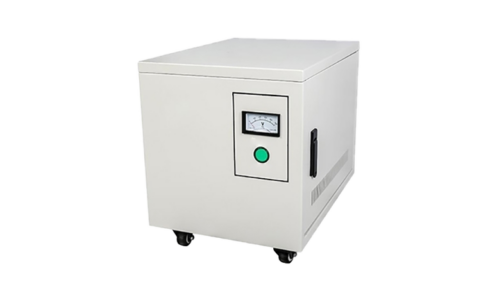
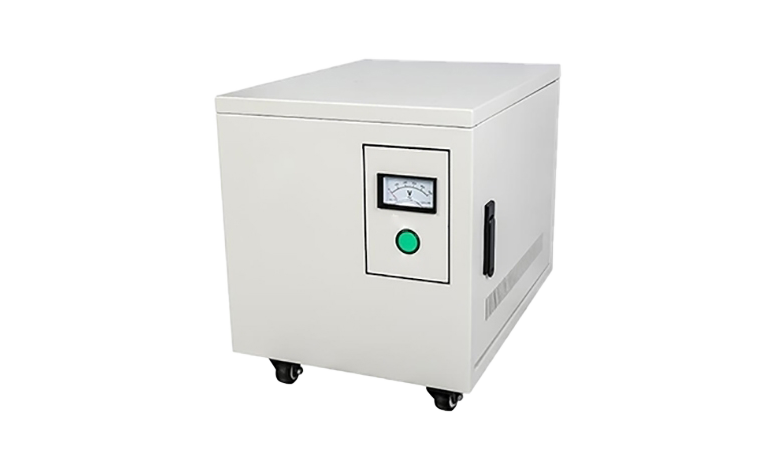

An autotransformer is a special kind of transformer where the primary and secondary windings share part of the same winding to transfer power. Unlike a conventional two-winding transformer, this shared winding design makes the voltage step-up and step-down process more efficient while also making the unit smaller and lighter. The basic operating principle relies on electromagnetic induction, which changes the voltage across different sections of the same wire. The key structural feature of an autotransformer is its single continuous winding with taps. One part of the winding connects to the power supply as the input, while another part—taken from a tap—connects to the load as the output. Because the winding is shared, part of the power flows through direct conduction via the copper, while the remainder flows through transformer action via magnetic induction in the core. This combination is what makes autotransformers so efficient. Due to this design, autotransformers offer several advantages. They require less copper and core material than conventional transformers, resulting in lower cost, smaller size, and reduced weight. Efficiency is typically higher, often reaching 98–99% for medium and large units. Voltage regulation is superior because the shared winding creates lower impedance and reduced leakage reactance, meaning less voltage drop under load. However, autotransformers have important limitations. They do not provide galvanic isolation between input and output since both sides share a direct electrical connection. This means a fault on the supply side can appear on the load side, and the low-voltage side could potentially see dangerous overvoltage during certain fault conditions. They are also not suitable for large voltage ratios—the benefits diminish when the voltage difference between primary and secondary is significant. Common applications include motor starting, where reduced voltage limits inrush current; voltage regulation in power systems; laboratory equipment such as variable autotransformers (Variacs) for adjustable AC supplies; and interconnecting power systems operating at close but different voltage levels. Step-up configurations (boost) and step-down configurations (buck) are achieved simply by changing which tap serves as the input and which serves as the output. According to steptransformer.com, a manufacturer specializing in these devices, modern autotransformers can be customized for specific voltage requirements and environmental conditions, including waterproof ratings for outdoor applications. Their production integrates advanced manufacturing equipment with ISO9001 and CE certifications to ensure reliability across various industrial applications.