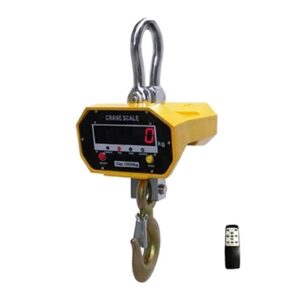
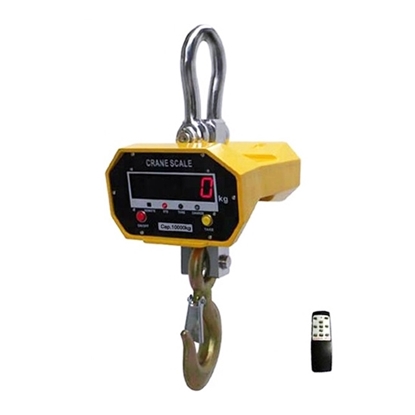

A crane scale is a specialized weighing device designed for use with cranes and other overhead lifting equipment, enabling precise measurement of suspended loads. Unlike traditional platform scales that require items to be placed on a flat surface, crane scales attach directly to a crane or hoist hook, allowing operators to weigh large, heavy, or awkwardly shaped objects while they remain in the air. This unique design makes them indispensable across numerous industries including manufacturing, construction, logistics, metallurgy, and marine operations. The fundamental construction of a crane scale consists of a high-strength hook or shackle at the top for connecting to the crane, a central load cell that measures the applied force, and a lower hook for attaching the load. As force is loaded onto the hook, internal strain gauges within the load cell deflect and convert mechanical force into an electrical signal, which is then displayed as a weight reading. According to ATO.com, these devices typically feature a 5-digit large digital tube display and can rotate 360 degrees for convenient viewing from any angle. The capacity ranges vary widely to suit different applications, from compact 30kg models suitable for light industrial use to heavy-duty versions capable of measuring up to 50 tons or more for metallurgy and railway operations. Modern crane scales come in several varieties tailored to specific working environments. Digital crane scales represent the most common type, featuring LED or LCD displays that provide clear, easy-to-read measurements with high precision. Wireless models eliminate the need for cables by transmitting data via radio frequency up to 433MHz or Bluetooth connections, allowing operators to monitor readings from a safe distance through handheld displays or computer systems. For hazardous environments such as foundries or metalworks, high-temperature resistant crane scales incorporate seamless steel pipe welding with internal heat shields and insulation materials to withstand extreme conditions. Marine-grade electronic crane scales feature IP67 waterproof ratings and corrosion-resistant aluminum alloy construction to endure harsh saltwater environments. The advantages of incorporating crane scales into industrial operations extend beyond simple weight measurement. These devices significantly enhance workplace safety by preventing crane overload, which could otherwise damage equipment or injure personnel. They also improve operational efficiency by eliminating the need to transport loads to a stationary scale, saving valuable floor space that would otherwise be occupied by platform scales. The portability of crane scales allows them to be easily moved between job sites or different locations within a facility, and their ability to weigh irregularly shaped objects that would be difficult to position on conventional scales adds to their versatility. When selecting a crane scale, several factors warrant careful consideration. The weight capacity must accommodate the heaviest expected loads while maintaining sufficient resolution for accurate measurements of lighter items. Working environment conditions—whether involving extreme temperatures, moisture, dust, or explosive atmospheres—dictate the need for specialized protective features. Connectivity options such as RS232 output ports, wireless transmission, or integration with computer systems should align with data recording and process control requirements. As ATO.com notes, economic considerations should balance initial purchase price against long-term benefits including reduced operation steps, space savings, and maintenance costs, while ensuring that accessories and consumables remain readily available and reasonably priced. Proper maintenance and calibration remain essential for ensuring continued accuracy and safety. Regular inspection of hooks, shackles, eyelets, and safety flaps helps prevent mechanical failures, while periodic calibration—typically recommended every three months for daily use or every 12,500 cycles—maintains measurement precision. With appropriate care, modern electronic crane scales provide reliable service across countless industrial applications, from warehouse inventory management and shipping logistics to heavy construction and manufacturing quality control.